
Before the
highway,
master the
emergency.
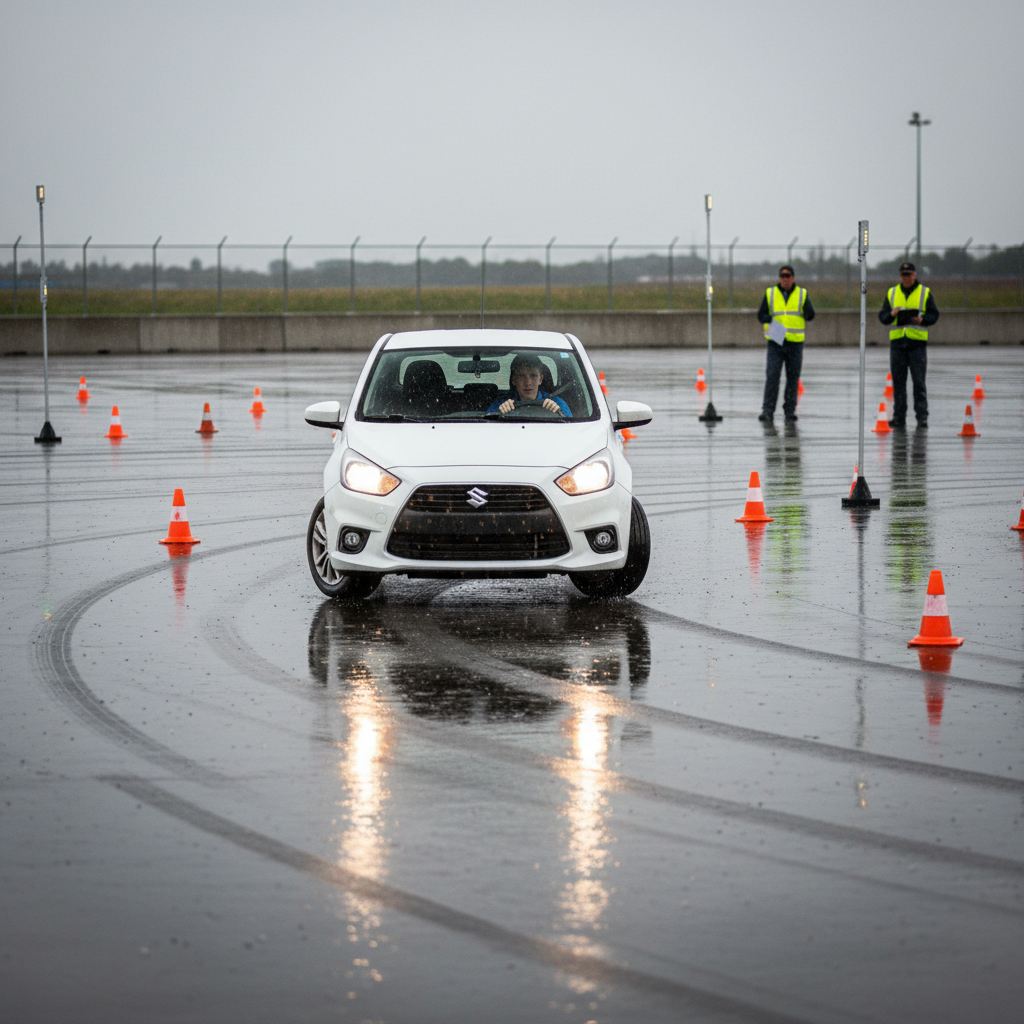
Real skid cars. Brake-failure simulators. Live telemetry debriefs. Your teen drives it before it drives them.
of Shift graduates avoid their first accident
Numbers don't lie.
Crashes do.
Reaction Time Improvement
The average Shift graduate shaves 4.2 seconds off their hazard-recognition window — the difference between a near-miss and a collision at 45 mph.
Behind-the-Wheel Training
Every student logs 18 hours of actual driving time — skid pad, wet handling course, emergency lane change, and night simulation. Not a classroom.
Program Duration
Six weeks of progressive escalation: week one is controlled oversteer, week six is a full emergency scenario with instructor voice-only guidance.
Read the spec sheet.
One program teaches teenagers to pass a test. The other teaches them to survive one.
The exhale you
didn't know you needed.
My son Marcus went through the program last spring. Three weeks after he got his license, a pickup ran a red light. He corrected and stopped in time. The instructor told me that's a textbook hazard response — and Marcus just said 'we practiced that.' I don't have words.
I've built life-skills curriculum for eleven years. This is the only external program I've ever put in front of my school board without hesitation. The telemetry debrief alone is worth the enrollment — teenagers respond to data, not lectures.

My daughter Sofia was nervous behind the wheel — anxious, overcautious. After the skid pad session she called me and said 'Mom, I know what to do now.' That confidence isn't something you can teach in a classroom. She drives herself to school every day now and I actually sleep.
Every dollar, accounted for.
See exactly what your investment buys — in hours, sessions, and skills your teen carries for life.
Reserve a Spot
Takes 60 seconds. We'll confirm availability and call you within 24 hours.